
Appendicitis
Varicose Veins
Piles
Fissure
Fistula
Pilonidal sinus
Circumcision
Hernia
Hydrocele
Hysterectomy
Gynaecomastia
Lipoma
Sebaceous cyst
Diabetes
Diabetic foot
Gastric ulcer
Appendicitis
Thyroid surgery
Burns
Trauma & Accident care
Intestinal perforation
Intestinal obstruction
DVT
Gallstone
Metabolic and Bariatric
Best Appendicitis Treatment Hospital in Rajahmundry
- Advanced diagnosis and emergency treatment for appendicitis and abdominal pain conditions
- Experienced general surgeons, laparoscopic surgeons, and emergency care specialists
- 24/7 emergency surgical support for acute appendicitis cases
- Advanced laparoscopic appendectomy and minimally invasive surgery facilities
- State-of-the-art operation theatres and critical care infrastructure
- Comprehensive care for simple, acute, recurrent, and ruptured appendicitis
- Personalized treatment plans focused on faster recovery and minimal complications
- Advanced diagnostic imaging and laboratory support for accurate evaluation
- Compassionate, patient-focused, and affordable surgical care
- Integrated emergency, surgical, anesthesia, and postoperative rehabilitation services
- Modern minimally invasive techniques for reduced pain and quicker recovery
- Continuous monitoring and postoperative support for safe healing
Apex Hospitals is one of the trusted healthcare destinations for advanced appendicitis treatment and emergency surgical care in Rajahmundry. The hospital provides comprehensive diagnosis, emergency management, laparoscopic surgery, postoperative care, and complication management for appendicitis with a strong focus on patient safety, rapid intervention, and faster recovery.
Many people make a serious mistake with abdominal pain. They wait. They self-medicate. They assume it is “gas,” indigestion, or food poisoning. That delay becomes dangerous when the real problem is appendicitis.
Appendicitis is not a condition that should be ignored or managed casually at home. It is a medical emergency in many cases. The appendix can become inflamed, swollen, infected, and eventually rupture if treatment is delayed. Once rupture occurs, infection spreads inside the abdomen, increasing the risk of severe complications, abscess formation, sepsis, and life-threatening conditions.
The biggest problem is that early appendicitis symptoms often start mildly:
- Stomach pain
- Nausea
- Loss of appetite
- Mild fever
- Vomiting
- Abdominal discomfort
Patients delay hospital evaluation because the symptoms initially seem manageable. That delay is exactly what increases surgical risk.
At Apex Hospitals, patients receive evidence-based appendicitis treatment supported by experienced general surgeons, laparoscopic surgeons, anesthesiologists, radiologists, emergency physicians, and critical care specialists. The hospital focuses on early diagnosis, emergency surgical intervention, minimally invasive treatment, infection prevention, and safe postoperative recovery.
The appendicitis treatment program at Apex Hospitals covers:
- Acute appendicitis
- Recurrent appendicitis
- Chronic appendicitis
- Ruptured appendix
- Appendicular abscess
- Appendicular mass
- Pediatric appendicitis
- Complicated appendicitis
- Laparoscopic appendectomy
- Open appendectomy
- Emergency abdominal surgery
As one of the advanced surgical and emergency care centers in Rajahmundry, Apex Hospitals combines modern medical expertise with patient-centered care to provide complete appendicitis management under one roof. The hospital emphasizes rapid diagnosis, emergency response, minimally invasive surgery, infection control, pain management, and faster recovery.
The surgical specialists at Apex Hospitals work closely with emergency physicians, radiologists, anesthesiologists, intensivists, nurses, laboratory teams, and rehabilitation professionals to ensure coordinated and comprehensive care for every patient. Whether patients require emergency surgery, laparoscopic appendectomy, postoperative monitoring, abscess management, or treatment for complicated appendicitis, Apex Hospitals delivers comprehensive care with clinical precision and compassionate support.

Why Choose Apex Hospitals for Appendicitis Treatment
At Apex Hospitals, appendicitis management focuses on rapid diagnosis, emergency surgical intervention, minimally invasive treatment, complication prevention, and faster patient recovery. The hospital combines experienced specialists, modern surgical technology, and patient-centered care to ensure effective treatment outcomes.
Experienced General & Laparoscopic Surgeons
The hospital is supported by highly experienced surgeons trained in emergency abdominal surgery and advanced minimally invasive laparoscopic procedures.
24/7 Emergency Surgical Care
Emergency surgical support is available round the clock for:
- Acute abdominal pain
- Appendicitis emergencies
- Ruptured appendix
- Abdominal infection
- Severe vomiting and fever
- Surgical complications
Advanced Laparoscopic Surgery Facilities
Modern minimally invasive surgical systems support:
- Smaller incisions
- Reduced pain
- Faster recovery
- Minimal scarring
- Reduced infection risk
- Shorter hospital stay
Comprehensive Surgical Care
Apex Hospitals provides complete diagnosis and treatment for:
- Acute appendicitis
- Complicated appendicitis
- Ruptured appendix
- Pediatric appendicitis
- Abdominal infections
- Appendicular abscesses
Personalized Treatment Plans
Every patient receives individualized care based on:
- Severity of inflammation
- Presence of rupture
- Infection spread
- Age and health condition
- Surgical risk
- Recovery needs
- Associated medical conditions
Modern Surgical Infrastructure
The hospital is equipped with advanced operation theatres, laparoscopic surgical systems, imaging facilities, intensive care units, and emergency monitoring support.
Affordable & Accessible Surgical Care
Apex Hospitals believes emergency surgical treatment should remain affordable and accessible without compromising patient safety or treatment quality.
Our Expert Surgical Team
The appendicitis treatment department at Apex Hospitals is supported by experienced general surgeons, laparoscopic surgeons, emergency physicians, anesthesiologists, radiologists, nurses, intensivists, and rehabilitation professionals dedicated to delivering advanced emergency surgical care.
The team focuses on:
- Rapid diagnosis
- Emergency response
- Safe surgery
- Infection prevention
- Minimally invasive treatment
- Pain management
- Faster recovery
- Long-term patient safety
Through coordinated multidisciplinary care, patients receive complete appendicitis management under one roof.
Understanding Appendicitis
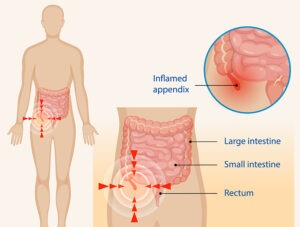
Appendicitis is inflammation of the appendix, a small finger-shaped organ attached to the large intestine in the lower right side of the abdomen.
When the appendix becomes blocked:
- Bacteria multiply inside
- Swelling increases
- Infection develops
- Blood supply reduces
- Pus accumulates
If untreated, the appendix may rupture, spreading infection throughout the abdominal cavity.
Appendicitis is one of the most common causes of emergency abdominal surgery and requires immediate medical evaluation.
Ignoring persistent abdominal pain is irresponsible because appendicitis can progress rapidly within hours.
Common Causes of Appendicitis
Appendicitis develops when the appendix becomes blocked or infected.
- Stool Blockage : Hard stool particles may block the appendix opening.
- Infection : Bacterial or viral infections can trigger inflammation.
- Enlarged Lymph Tissue : Swollen lymph nodes inside the intestine may obstruct the appendix.
- Intestinal Worms : In some cases, parasites contribute to blockage.
- Digestive Tract Inflammation : Inflammatory bowel conditions may increase appendicitis risk.
- Trauma : Rarely, abdominal injury may contribute to appendiceal inflammation.
Symptoms of Appendicitis
Symptoms often begin suddenly and worsen progressively.
Common symptoms include:
- Pain near the navel shifting to the lower right abdomen
- Severe abdominal pain
- Loss of appetite
- Nausea
- Vomiting
- Fever
- Abdominal swelling
- Constipation or diarrhea
- Difficulty walking due to pain
- Pain worsening during movement or coughing
Not all patients show “classic” symptoms. Children, elderly patients, and pregnant women may present differently, making early medical evaluation extremely important.
Types of Appendicitis
- Acute Appendicitis : Sudden inflammation requiring emergency treatment.
- Chronic Appendicitis : Long-standing mild inflammation causing recurrent abdominal pain.
- Recurrent Appendicitis : Repeated episodes of appendix inflammation.
- Ruptured Appendix : A severe complication where the appendix bursts and spreads infection.
- Appendicular Abscess : Collection of pus around the inflamed appendix.
- Complicated Appendicitis : Advanced infection involving surrounding tissues and abdominal organs.
Risk Factors for Appendicitis
Appendicitis can affect individuals of any age, but some groups are at higher risk.
High-risk groups include:
- Children and teenagers
- Young adults
- Individuals with digestive infections
- Patients with poor dietary habits
- People with low-fiber diets
- Individuals with previous abdominal infections
Appendicitis should never be ignored regardless of age.
Complications of Untreated Appendicitis
Delayed treatment dramatically increases complication risk.
- Ruptured Appendix : The infected appendix bursts and spreads bacteria throughout the abdomen.
- Peritonitis : Severe infection of the abdominal lining causing life-threatening complications.
- Abscess Formation : Pus collections develop around the appendix.
- Sepsis : Infection spreads into the bloodstream causing systemic organ failure.
- Intestinal Obstruction : Inflammation may affect intestinal function.
- Prolonged Hospitalization : Complicated appendicitis requires longer recovery and intensive treatment.
- The earlier the diagnosis, the lower the complication risk.

Diseases & Conditions Treated
The surgical department at Apex Hospitals treats a wide range of appendix and abdominal conditions.
- Acute Appendicitis : Emergency diagnosis and surgical removal of the inflamed appendix.
- Ruptured Appendix : Advanced surgical management for perforated appendicitis.
- Appendicular Abscess : Drainage and infection control procedures.
- Chronic Appendicitis : Evaluation and treatment for recurrent abdominal pain associated with appendix inflammation.
- Pediatric Appendicitis : Specialized appendicitis care for children and adolescents.
- Complicated Intra-Abdominal Infection : Comprehensive management of infection spread and abdominal inflammation.
Diagnosis & Advanced Facilities at Apex Hospitals
Accurate diagnosis is critical because appendicitis symptoms may resemble several other abdominal conditions.
Clinical Evaluation
Specialists assess:
- Pain location
- Symptom duration
- Fever
- Vomiting
- Abdominal tenderness
- Movement-related pain
- Digestive symptoms
Blood Investigations
Laboratory tests help identify:
- Infection
- Elevated white blood cells
- Inflammatory response
Ultrasound Scan
Ultrasound helps evaluate:
- Appendix swelling
- Fluid collection
- Abscess formation
- Other abdominal conditions
CT Scan
CT imaging provides highly accurate diagnosis in complicated or unclear cases.
Urine Examination
Urine tests help rule out urinary tract conditions and kidney stones.
Pregnancy Testing
Necessary in female patients to differentiate gynecological emergencies.
Advanced Appendicitis Treatment Options
Apex Hospitals provides modern emergency surgical care based on the severity and stage of appendicitis.
Laparoscopic Appendectomy
Laparoscopic surgery is the preferred treatment in many cases.
Benefits include:
- Smaller cuts
- Less pain
- Faster recovery
- Minimal scarring
- Reduced hospital stay
- Lower infection risk
- Faster return to normal activities
Open Appendectomy
Open surgery may be required in:
- Ruptured appendix
- Severe infection
- Complex abdominal conditions
- Extensive inflammation
Emergency Infection Management
Patients with rupture or abscess may require:
- Intravenous antibiotics
- Fluid support
- Intensive monitoring
- Drainage procedures
Pediatric Appendicitis Care
Children require specialized monitoring and surgical support for safe recovery.
Benefits of Early Appendicitis Treatment
Early diagnosis and prompt surgery significantly improve outcomes.
Benefits include:
- Reduced rupture risk
- Less infection spread
- Faster recovery
- Lower complication rates
- Reduced hospitalization
- Minimal surgical trauma
- Better postoperative recovery
- Lower healthcare costs
Waiting “to see if the pain goes away” is often the wrong decision with appendicitis.
Recovery & Postoperative Care
Recovery depends on:
- Severity of appendicitis
- Surgical method used
- Presence of rupture
- Infection status
- Patient health condition
Postoperative care may include:
- Pain management
- Antibiotic therapy
- Wound care
- Gradual diet progression
- Mobility support
- Follow-up consultations
Most laparoscopic appendectomy patients recover relatively quickly and return to normal activities within a short period.
Complicated appendicitis cases may require longer recovery and close monitoring.
Preventive Digestive & Surgical Health Care
Appendicitis cannot always be prevented, but maintaining digestive health helps reduce gastrointestinal complications.
- Healthy Diet : High-fiber foods support better bowel function.
- Adequate Hydration : Proper hydration improves digestive health.
- Early Medical Attention : Persistent abdominal pain should never be ignored.
- Avoid Self-Medication : Painkillers may temporarily mask symptoms while the condition worsens internally.
- Routine Health Monitoring : Regular medical evaluation helps identify digestive disorders early.
Pediatric Appendicitis
Appendicitis in children is often difficult to diagnose because symptoms may mimic:
- Stomach infection
- Food poisoning
- Constipation
- Viral illness
Children may experience:
- Irritability
- Fever
- Vomiting
- Difficulty walking
- Loss of appetite
Delayed diagnosis in children significantly increases rupture risk. Parents should never ignore persistent abdominal pain in children.
Appendicitis During Pregnancy
Appendicitis during pregnancy requires immediate specialist evaluation because symptoms may appear differently due to changes in abdominal anatomy.
Delayed treatment increases risks for:
- Mother
- Pregnancy
- Fetal health
Apex Hospitals provides coordinated care involving surgeons, gynecologists, anesthesiologists, and emergency specialists for safe management of appendicitis during pregnancy.
Minimally Invasive Surgical Excellence at Apex Hospitals
Modern laparoscopic surgery has significantly improved appendicitis treatment outcomes.
Advantages include:
- Better cosmetic results
- Less postoperative pain
- Faster discharge
- Lower infection rates
- Quicker return to work and routine activities
Apex Hospitals emphasizes minimally invasive surgical excellence whenever clinically appropriate.
Advanced Appendicitis Care You Can Trust in Rajahmundry
- Apex Hospitals continues to provide advanced appendicitis treatment and emergency surgical care with a strong commitment to rapid intervention, patient safety, minimally invasive surgery, infection control, and faster recovery.
- With experienced surgeons, advanced laparoscopic technology, modern infrastructure, emergency readiness, and patient-focused care, the hospital remains a trusted destination for appendicitis treatment in Rajahmundry.
- Whether you require emergency appendicitis evaluation, laparoscopic appendectomy, treatment for ruptured appendix, pediatric appendicitis care, or postoperative recovery support, Apex Hospitals is committed to delivering comprehensive and compassionate surgical care tailored to every patient’s needs.
Frequently Asked Questions (FAQs)
1. What is appendicitis?
Appendicitis is inflammation and infection of the appendix, usually requiring emergency medical treatment.
2. What are the early symptoms of appendicitis?
Common symptoms include abdominal pain, nausea, vomiting, fever, loss of appetite, and pain shifting to the lower right abdomen.
3. Is appendicitis a medical emergency?
Yes. Delayed treatment may cause appendix rupture and severe abdominal infection.
4. What causes appendicitis?
Appendicitis commonly develops due to blockage, infection, stool particles, or inflammation inside the appendix.
5. How is appendicitis diagnosed?
Diagnosis may involve clinical examination, blood tests, ultrasound, CT scan, and abdominal evaluation.
6. What is laparoscopic appendectomy?
It is a minimally invasive surgery performed using small incisions and a camera-assisted surgical system to remove the appendix.
7. Can appendicitis go away without surgery?
Some mild cases may temporarily improve, but untreated appendicitis often worsens and may rupture. Medical evaluation is essential.
8. How long does recovery take after appendicitis surgery?
Recovery depends on the severity and surgical method, but laparoscopic surgery generally allows faster healing and return to routine activities.
9. What happens if the appendix bursts?
A ruptured appendix spreads infection inside the abdomen and can become life-threatening without emergency treatment.
10. Why should I choose Apex Hospitals for appendicitis treatment?
Apex Hospitals offers experienced surgeons, 24/7 emergency care, advanced laparoscopic surgery, modern diagnostic facilities, and comprehensive postoperative support under one roof.
Get in Touch
For any questions fill out our form

Make
Appointment
&
Take Care Of Your
Healthy Life